FEATURED COURSE for instructional design
PHS 100: Introduction to Aging Studies
A multidisciplinary online course designed to challenge assumptions about aging through active learning, reflection, discussion, and real-world application. This course example highlights the design decisions, LMS development, and continuous improvement efforts that contributed to recognition through the Anthology Blackboard Exemplary Course Award.
Course
PHS 100: Introduction to Aging Studies
My Role
Online Instructor & Course Designer
LMS
Blackboard Learn, Ultra, & Canvas
Recognition
Anthology Blackboard Exemplary Course Award
The Design Challenge
Introduction to Aging Studies often attracts students with limited prior exposure to aging-related coursework. Many enter the course with misconceptions about aging or view the subject as personally and professionally irrelevant. The design challenge was to create an engaging online learning experience that encourages students to critically examine assumptions about aging while connecting course concepts to their own lives, communities, and future careers.
Learning Objectives
Students will:
- Recognize demographic trends affecting an aging population.
- Analyze ageism and its impact on individuals and society.
- Identify physical, psychological, and social aspects of aging.
- Evaluate support systems that promote successful aging.
- Recognize the varied experiences and pathways of aging among older adults.
- Assess healthcare and long-term care issues affecting aging populations.
Course Design Approach
Active Learning
Students engage through discussions, reflection activities, and real-world application of content learned.
Meaningful Connection
Course activities encourage students to connect content to personal experiences, professional goals, and contemporary issues.
Continuous Improvement
The course has evolved through multiple revisions informed by student feedback, and instructional design best practices.
Course Organization & LMS Design
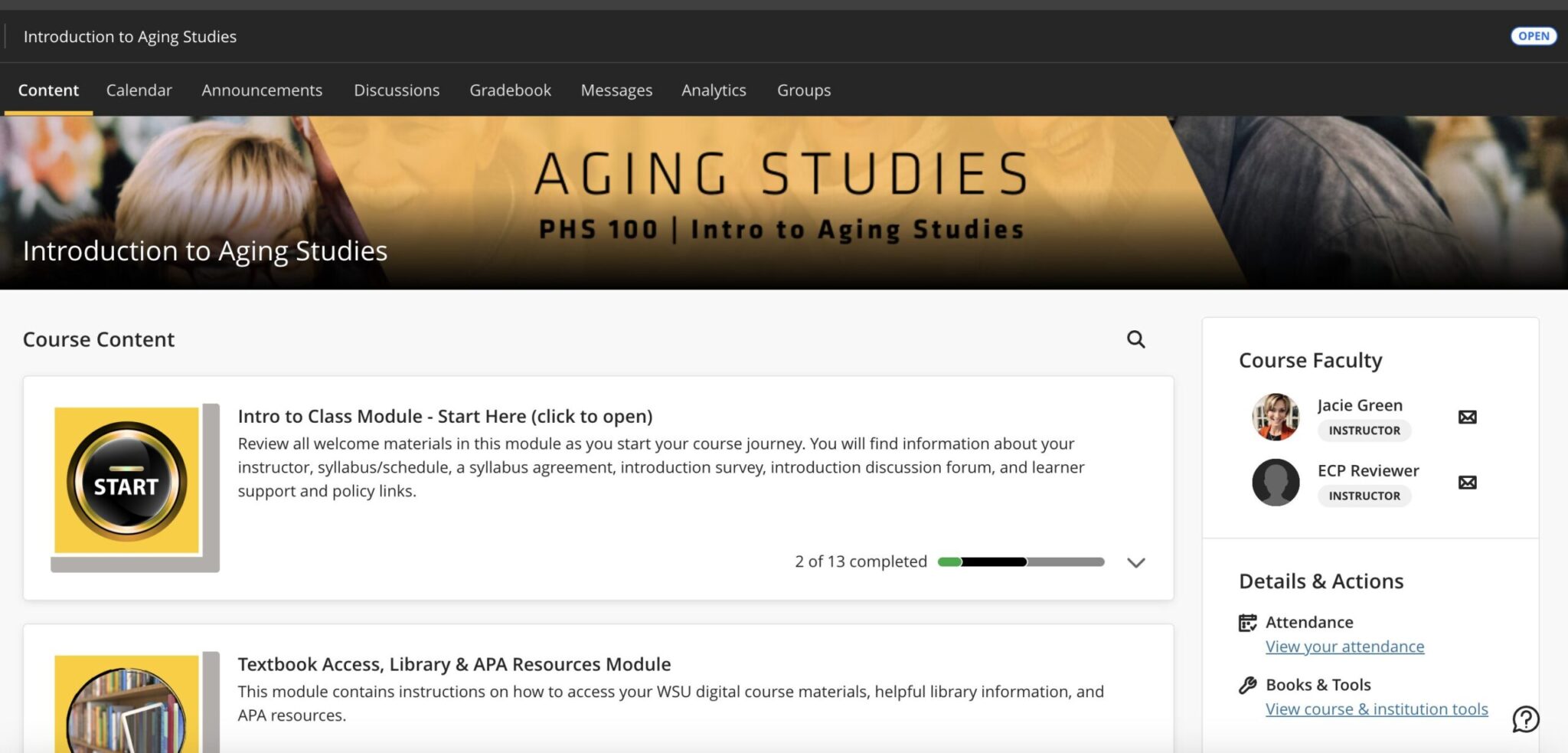
Blackboard Ultra LMS
Homepage content is grouped into dedicated modules, beginning with a “Start Here” orientation module that introduces students to the course, expectations, and available resources. Subsequent modules contain textbook and library materials, followed by weekly learning modules containing all assignments, discussions, and assessments due that week organized in a predictable format. This structure reduces cognitive load, supports student navigation, and allows learners to focus on course content rather than searching for information within the LMS.
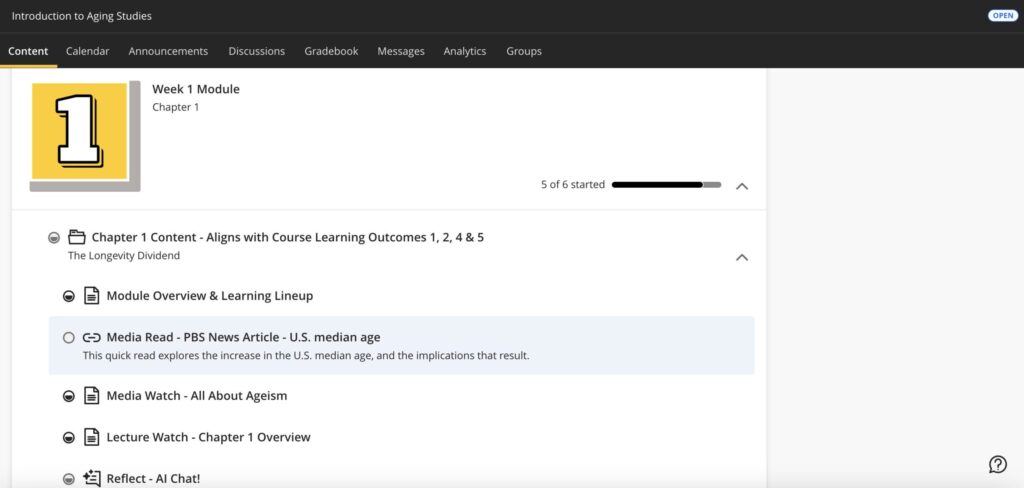
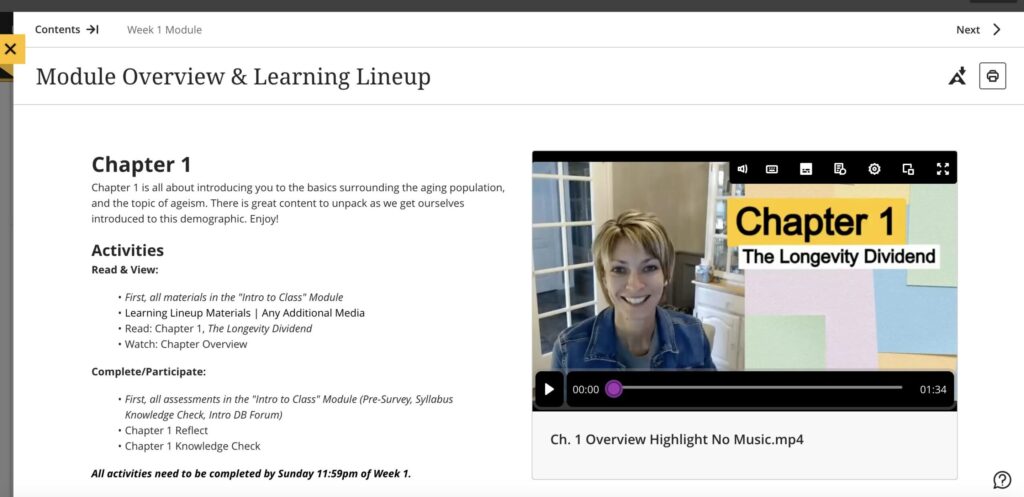
Module Design
The course is organized into clearly structured learning modules that provide clear navigation, learning objectives, instructional content, activities, and assessments. This predictable course structure ensures a consistent experience from one week to the next.
“I really enjoyed the module based layout of the course and how each module was outlined in the syllabus. I knew what to expect within the course from the very first day.” – PHS 100 Student, spring 2024
“She laid out the course in a way that helped me learn and feel comfortable with taking the course online, she also still has a large presence and cares about our learning even though it’s an online course.” – PHS 100 Student, spring 2026
Engagement & Community Building
Online learning is most effective when students feel connected—to the content, to one another, and to their own experiences. Through discussion-based learning and reflective chat activities, students are encouraged to explore diverse perspectives, challenge assumptions about aging, and engage with course concepts in ways that are both personally meaningful and academically thoughtful.
“Jacie supported me and other students by creating an engaging and comfortable online class community, encouraging us to discuss our thoughts and opinions on various topics covered. She is a friendly and encouraging instructor who even though conducted an online class, provided us students with the sense of belonging.” – PHS 100 Student, spring 2026
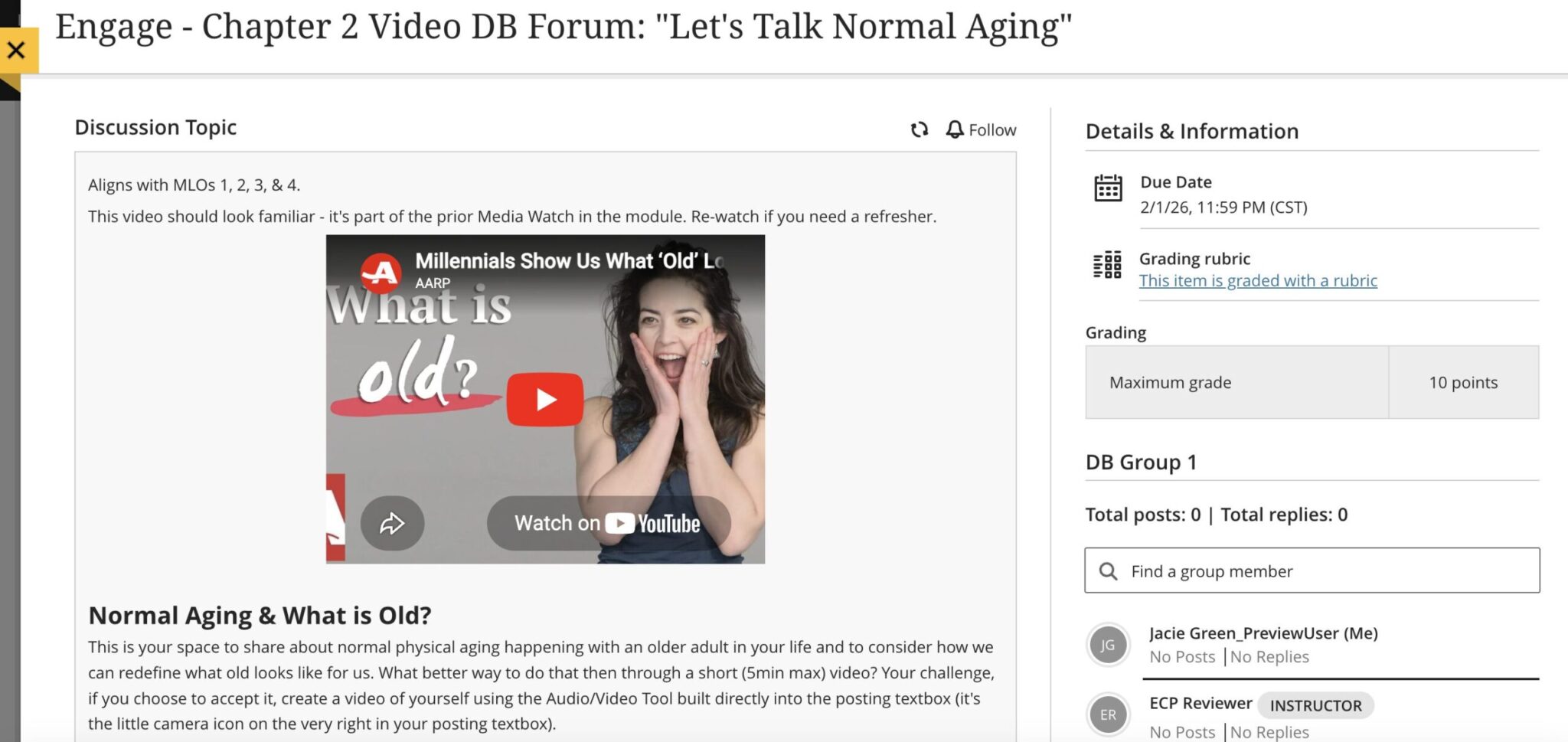
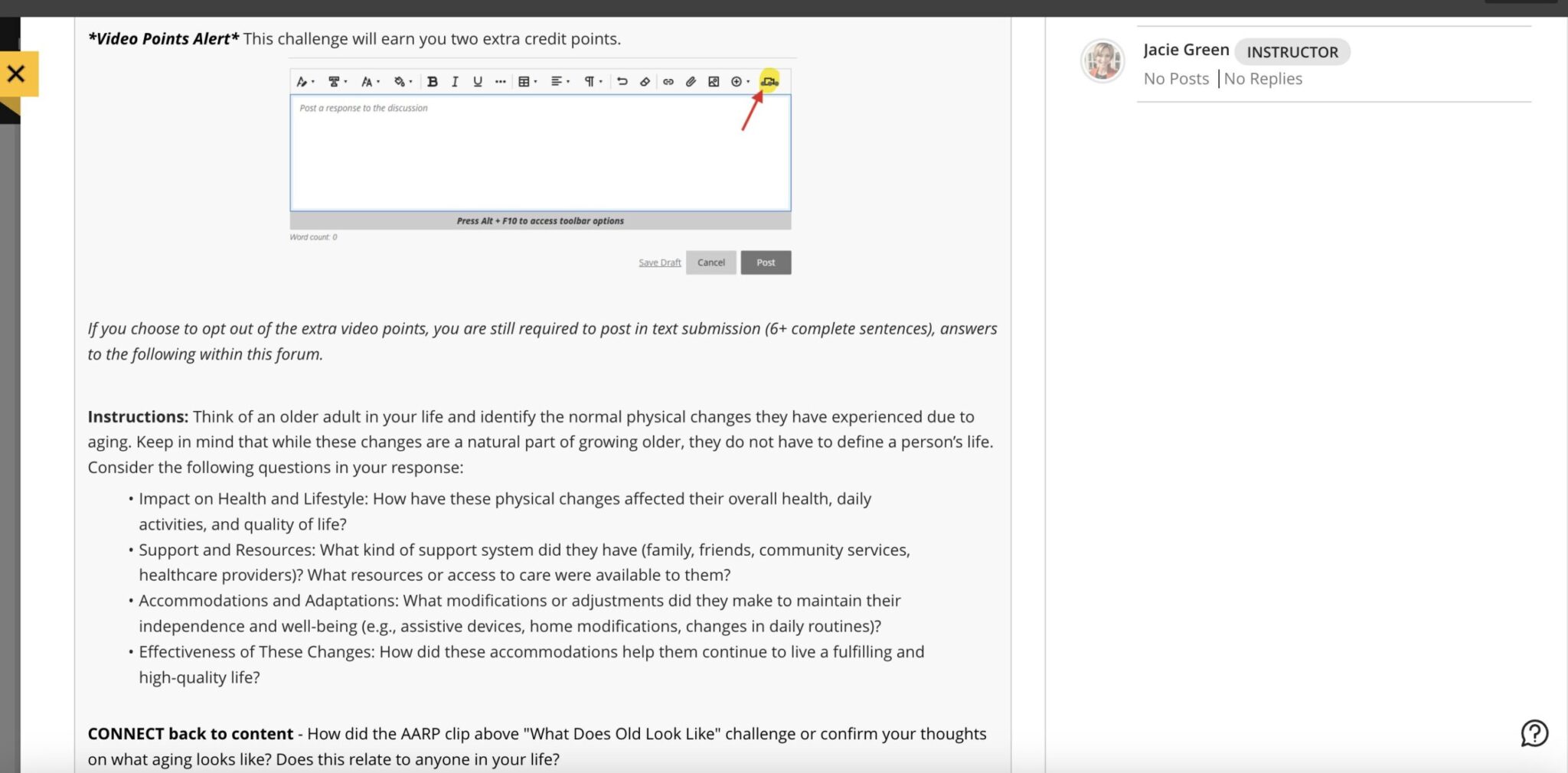
Discussion Board Example
To support different communication preferences and foster a stronger sense of community, many discussion activities allow students to respond using either written text or video. Providing multiple participation options encourages authentic interaction, helps students establish a more personal presence in the course, and creates opportunities for richer peer-to-peer engagement.
AI Chat & Reflect Example
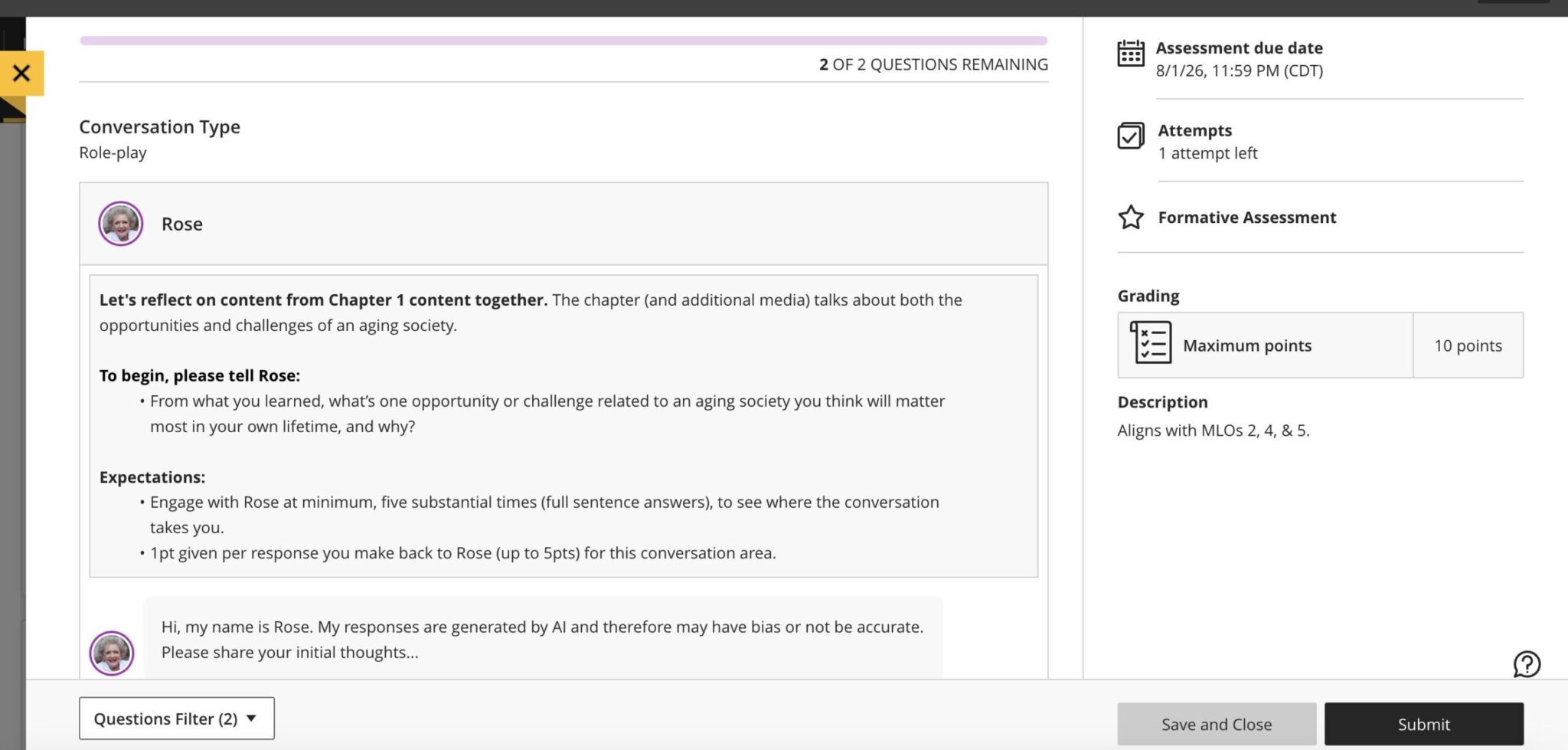
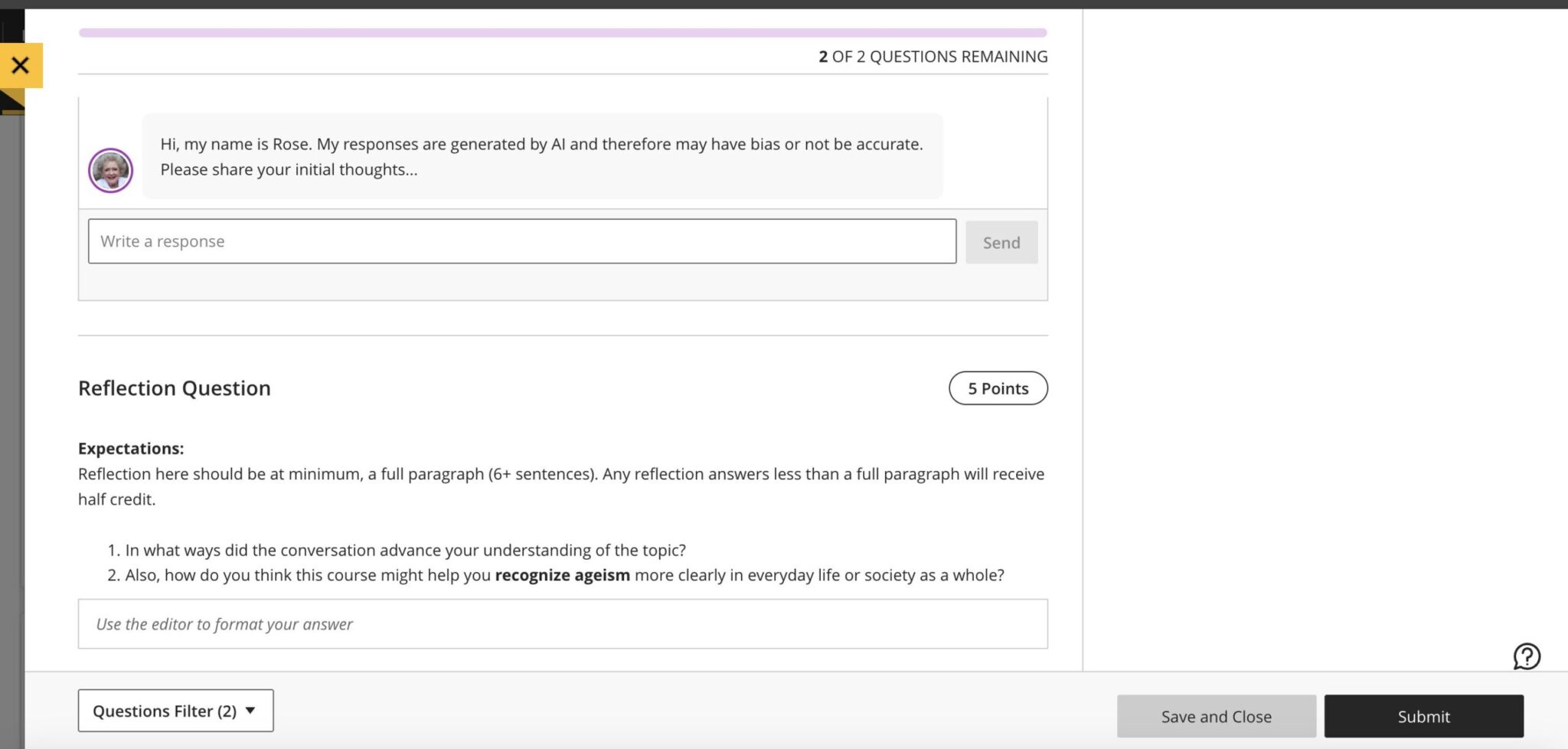
Introduced in summer 2025, the AI Chat and Reflect activities were designed to promote guided inquiry, critical thinking, and reflection beyond traditional assessment. The activity was developed to create a low-stakes environment where students could explore contemporary topics, receive immediate feedback, and deepen their understanding through thoughtful and fun reflection.
Students participate in structured conversations related to course topics and subsequently reflect on the interaction, the ideas explored, and how the experience influenced their understanding of aging. By combining live chat with reflection, these activities encourage students to connect course concepts to contemporary issues, personal perspectives, and real-world applications.
Early student feedback suggests that the AI Chat and Reflect activities support deeper engagement, reflection, and exploration of course concepts.
“I feel that the conversation advanced my understanding of the topic. Each question made me address another aspect of ageism that I wasn’t thinking about when I began the conversation.” – PHS 100 student, summer 2025
“First time using this, Rose gives me more questions about the topic to consider and a more in-depth reflection question on ideas I could explore and learn more about. This made me reflect more on what I knew on the topic and what more I could learn.” – PHS student, summer 2025
“I think this conversation definitely helped me deepen my understanding of the subject, because it allowed me to have to have that back and forth interaction. By having that life-like interaction I felt it was easier for me to share my thoughts without having to worry about formality.” – PHS student, fall 2025
Course Orientation and Learner Support
To support student success and reduce barriers to participation, I provide a course orientation video across all my courses similar to this example that introduces students to the course structure, navigation, expectations, and available resources. The course tour serves as an onboarding tool that helps students become familiar with the online learning environment before engaging with course content.
Course Redevelopment in Canvas LMS
Following successful development and instruction of PHS 100 in Blackboard Ultra, I was approached with the opportunity to redevelop the course within Canvas to support future delivery at another institution. Rather than simply transferring content between platforms, the redevelopment process focused on preserving the instructional design principles, learner experience, and course architecture that had been refined through years of teaching and continuous improvement.
While Blackboard Ultra and Canvas offer different tools and navigation structures, the course maintained a consistent module organization, predictable learning pathway, and alignment between learning objectives, activities, and assessments. For example, the AI chat tool is a feature specific to Blackboard Ultra, but students still engage in video or text discussion board postings, reflection questions, and hot topics journals for real-world application of content. Maintaining the core reflective assessments ensured that students would experience the same student-centered design, active engagement, and course continuity regardless of the learning management system being used.
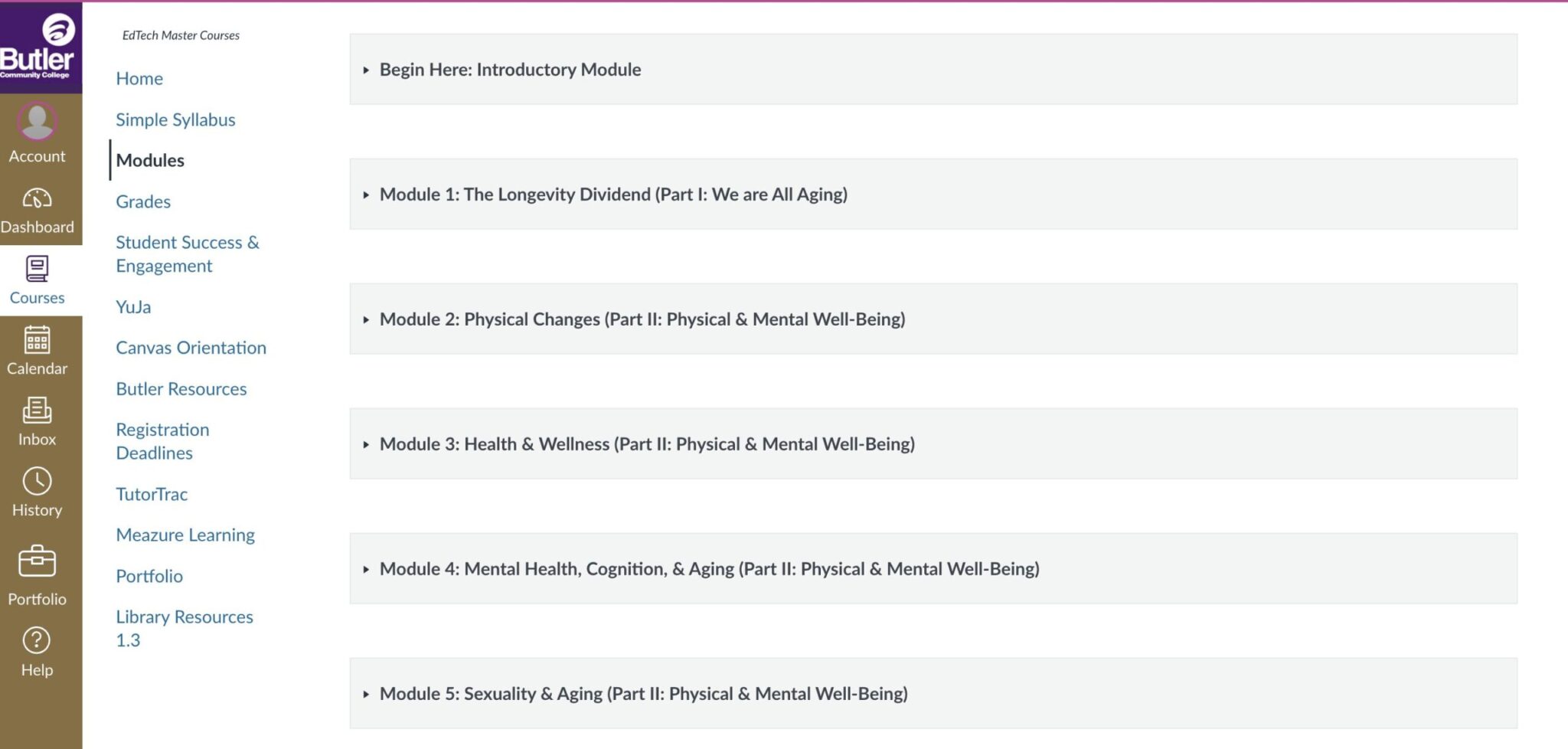
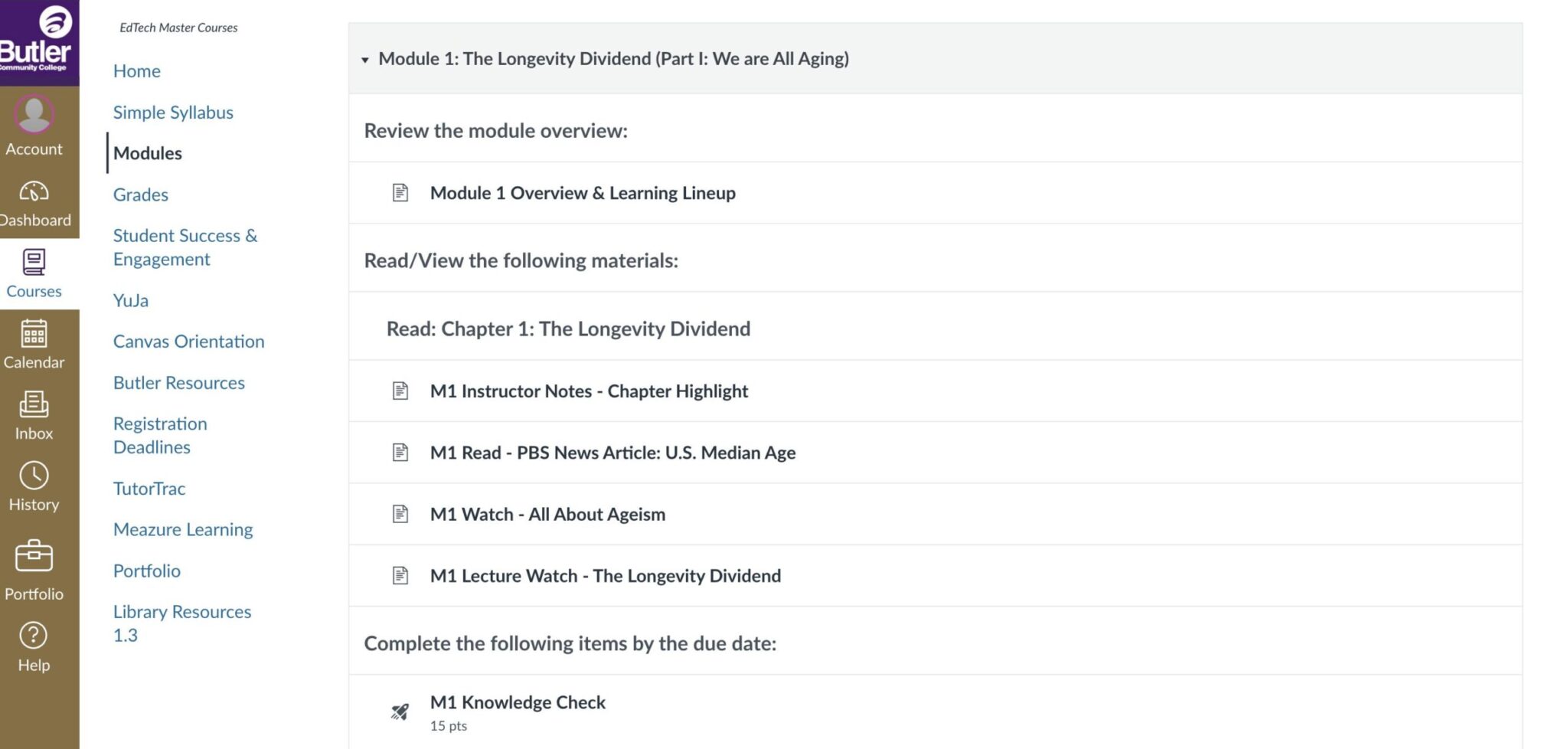
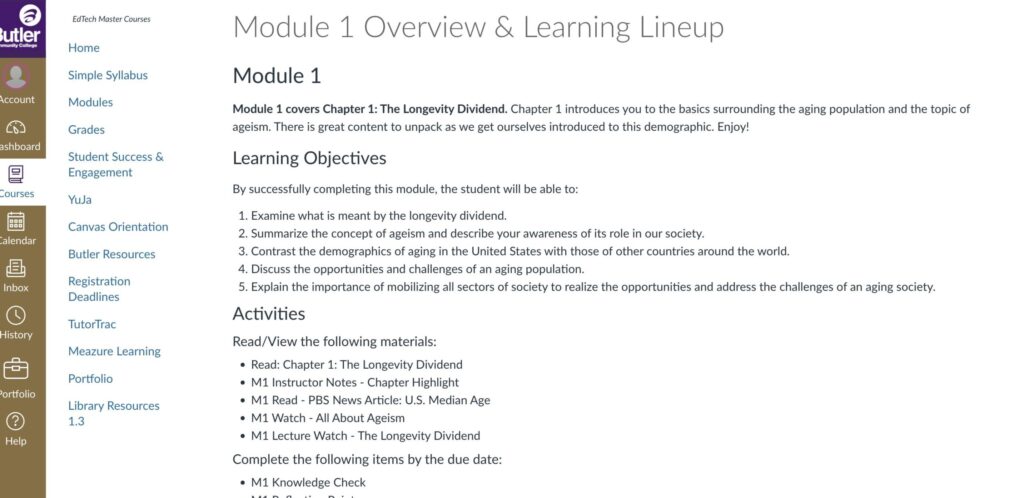
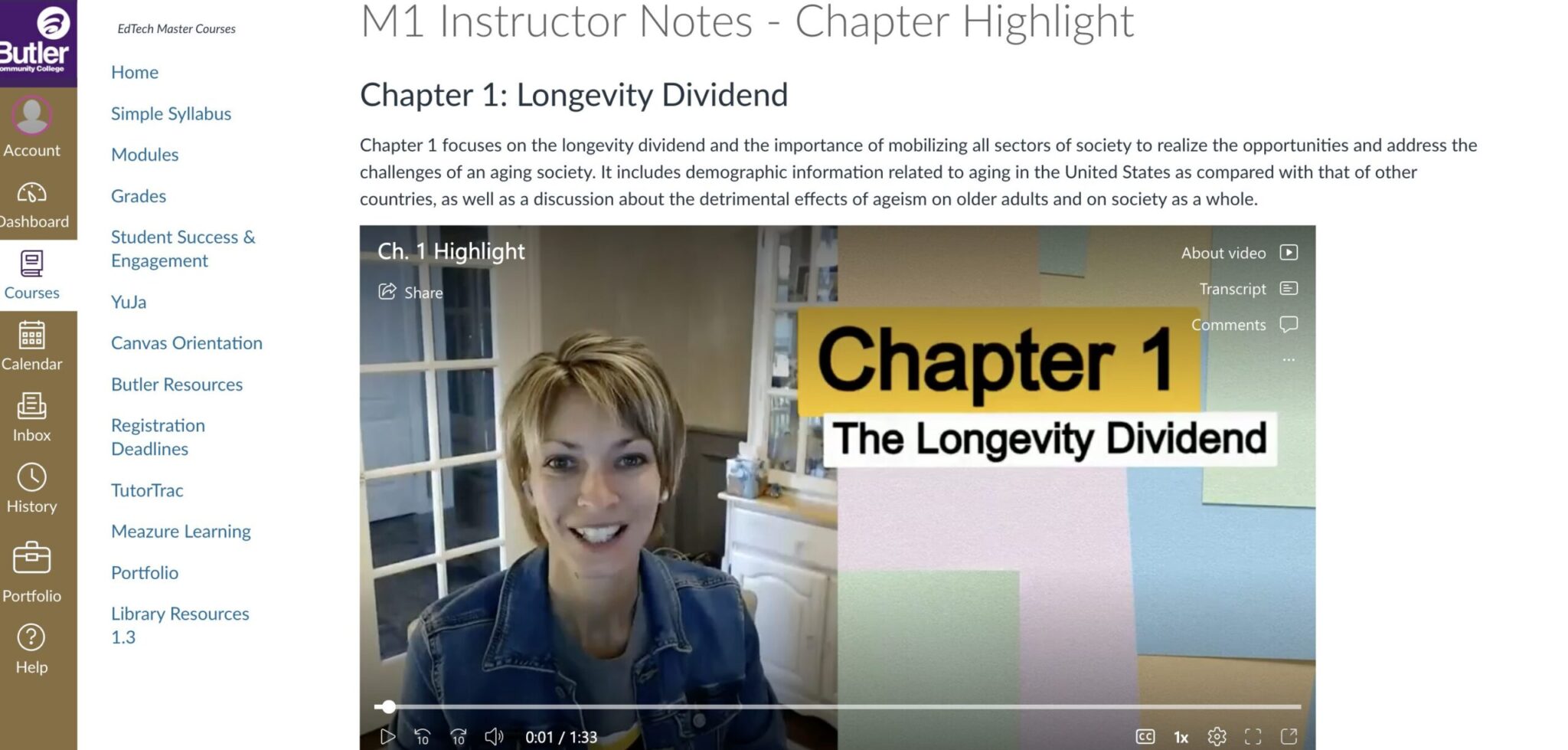
The Canvas course build demonstrates my ability to adapt course design across platforms while maintaining instructional integrity and an intentional, consistent learning experience.
Reflection & Continuous Improvement
PHS 100 has evolved through years of teaching, assessment, and continuous improvement. When I assumed responsibility for the course in 2020, it relied primarily on weekly discussions, exams, and slide-based instruction. While effective as a foundation, I identified opportunities to strengthen engagement, diversify assessment strategies, and increase instructor presence and build online community.
Over time, I redesigned the course to better support student learning through welcome videos, course orientation tours, weekly content highlights, recorded chapter overviews, knowledge checks, reflective journaling, varied discussion formats, and AI-supported reflection activities. The course has also been adapted across multiple delivery formats, including 16-week online, 8-week accelerated, and hybrid experiences, requiring intentional adjustments to pacing, engagement, and assessment design while maintaining alignment with course outcomes.
A consistent focus throughout these revisions has been fostering connection and online community. Students engage more deeply when they can interact with content, peers, and real-world applications in meaningful ways, and this principle continues to guide my instructional design decisions. The course has also incorporated emerging technologies, including Blackboard Ultra’s AI-supported learning activities, while maintaining a strong emphasis on accessibility, alignment, and purpose.
Students frequently note the impact of these design choices:
“She created a community within our online course and helped bridge the gap between screens.” — PHS 100 Student, Spring 2024
“The lectures and videos she provided for each chapter supported my learning and gave me a better understanding of the assignments and grasp the knowledge needed to be successful.” – PHS 100 Student, fall 2023
“I truly enjoyed the assignments, discussions, and real-world examples. We weren’t just memorizing facts; we were learning how to think differently about older adults and the world they experience. The courses’s structure made it easy to stay engaged, and I appreciated how everything connected to real life. It changed the way I view aging, healthcare, family dynamics, and even my own future.” – PHS 100 Student, fall 2025
As the course continues to evolve, future improvements will focus on expanding opportunities for personalized learning, strengthening accessibility practices, and thoughtfully integrating emerging technologies in ways that meaningfully enhance student learning and engagement.